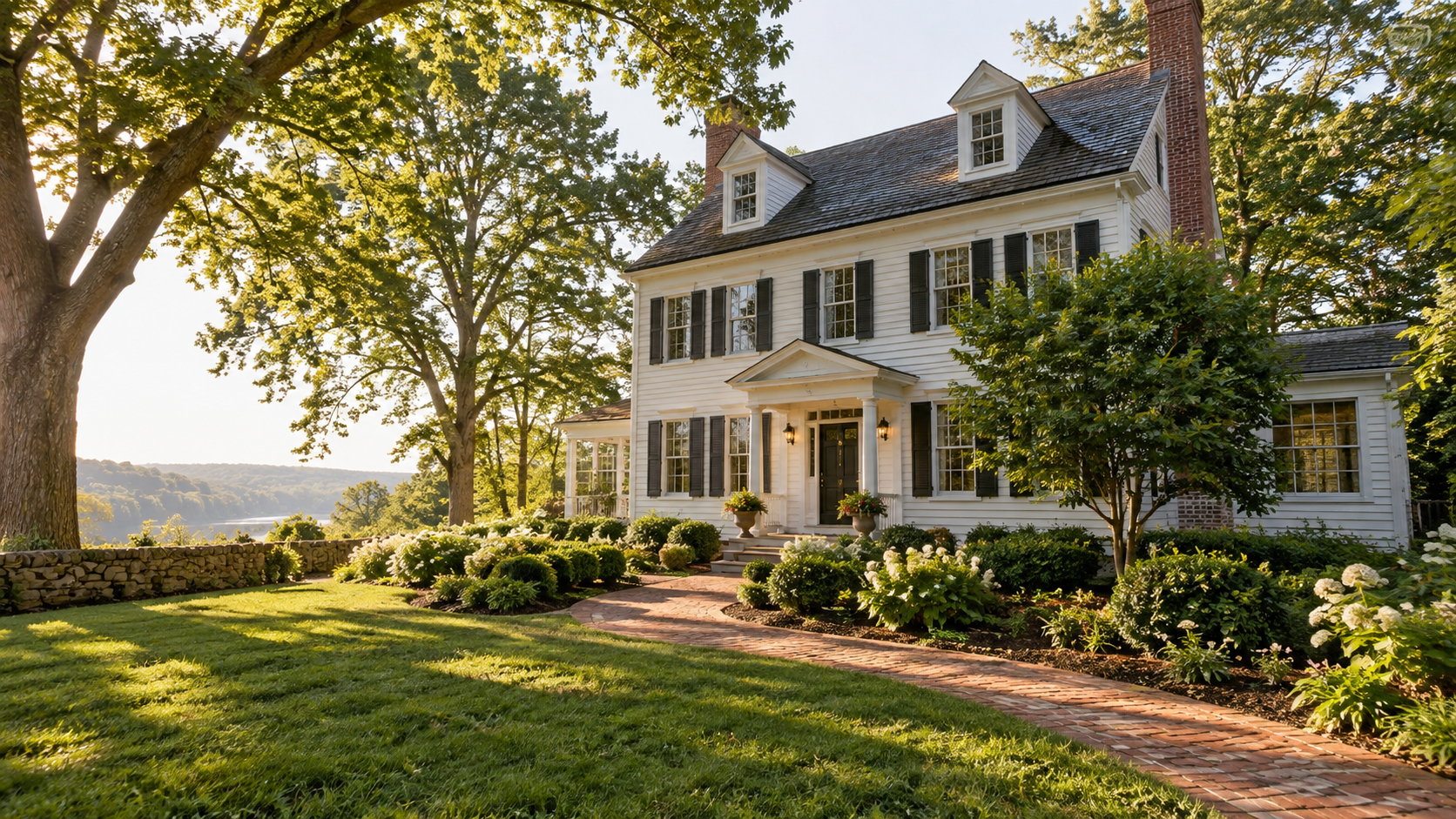
Historic homes offer something newer construction often cannot replicate: distinctive architecture, original craftsmanship, unique floor plans, and a connection to the history of the community around them.
Northern Virginia is home to properties spanning generations, from historic homes and farmhouses around Gainesville, Haymarket, Manassas, and Prince William County to older properties throughout Fairfax, Loudoun, Alexandria, and surrounding communities.
But buying one can be very different from purchasing a newer or more conventional home.
Financing may require additional planning. Comparable sales can be harder to find during the appraisal. An inspection may uncover building systems or materials that are uncommon today. And if a property has an official historic designation, buyers may need to understand what that means before planning future renovations.
That is why Tiffany Izenour of Freedom Property Management & Sales recently joined Angela Gansor, Senior Loan Officer with The Mya Group at Intercoastal Mortgage, at a historic home in Gainesville, Virginia to discuss what prospective buyers should know before making an offer.
At Freedom, our real estate team works with buyers, sellers, landlords, and tenants throughout Northern Virginia, so we often see the same property from several different perspectives over the course of its life. Angela and The Mya Group bring the lending side of that conversation, helping buyers and homeowners explore financing options based on their individual circumstances.
Watch: What Buyers Should Know About Financing a Historic Home
The biggest takeaway from Tiffany and Angela's conversation is straightforward:
Historic homes can be incredibly rewarding to own, but buyers should begin the financing, inspection, and property research process earlier than they might with a more conventional home.
Here are some of the biggest issues to consider.
Can You Finance a Historic Home With a Mortgage?
In many cases, yes.
Simply being old, architecturally unusual, or historically significant does not automatically prevent a home from qualifying for mortgage financing.
The challenge is that historic homes do not always fit neatly into today's housing standards.
The Gainesville property featured in Tiffany and Angela's video is a good example. It has features such as a unique floor plan, narrow staircases, and only one bathroom located on the second floor.
Those characteristics contribute to the home's personality, but they can also affect how lenders and appraisers evaluate its functionality, marketability, and value.
According to Angela, the best approach is to start the lending conversation before making an offer whenever possible. Different properties, borrowers, and renovation plans may point toward different financing strategies.
Buyers who want to understand their mortgage options can connect directly with Angela Gansor and The Mya Group at Intercoastal Mortgage. Angela has more than 25 years of financial-industry experience and works with buyers across a range of home-financing situations.
For buyers still looking for the right property, Freedom Property Management & Sales can also assist with the home-buying process throughout Northern Virginia, including Gainesville, Manassas, Fairfax, Leesburg, Woodbridge, Ashburn, and surrounding communities.
First, Understand What “Historic” Actually Means
One distinction buyers sometimes overlook is that an older home is not automatically an officially designated historic property.
A property could simply be several decades old and locally recognized for its character. It could also be:
- Individually listed on the Virginia Landmarks Register
- Listed on the National Register of Historic Places
- A contributing property within a historic district
- Located inside a locally regulated historic overlay district
- Subject to a separate historic-preservation easement
Those classifications can have very different implications.
The National Park Service explains that listing a privately owned property on the National Register of Historic Places does not, by itself, impose federal restrictions on what a private owner may do with the property. Local ordinances, preservation easements, tax-credit agreements, or other rules may still apply.
Learn about the National Register of Historic Places from the National Park Service
That local distinction is especially important in Northern Virginia.
For example, Prince William County has a Historic Overlay District where certain exterior changes require historic review. Other Northern Virginia jurisdictions, including Fairfax and Loudoun counties, also maintain their own historic districts and review processes.
Before buying, buyers should determine what designation actually applies to the property rather than relying only on phrases such as “historic home” in a real estate listing.
A local real estate professional can also help buyers identify the right questions to ask as part of their due diligence. Freedom's Northern Virginia real estate team works with clients buying and selling both conventional and unique properties throughout the region.
Why Historic Home Appraisals Can Be More Complicated
The appraisal is often one of the areas where financing a historic home becomes more complicated.
Appraisers generally rely heavily on comparable sales when developing an opinion of value.
With a home in a large subdivision, there may be several nearby properties with similar:
- Square footage
- Bedroom and bathroom counts
- Lot sizes
- Construction
- Age
- Floor plans
- Features
A one-of-a-kind historic property may have very few true comparables.
The closest recent sale might be newer, substantially renovated, located farther away, built in a different architectural style, or situated on a very different parcel of land.
That does not mean the property cannot be appraised.
It means the appraiser may need to analyze a wider range of comparable sales and make market-supported adjustments. Fannie Mae's appraisal guidance specifically allows adjustments to comparable properties when differences are supported by market evidence.
Historic significance also does not automatically translate dollar-for-dollar into appraised value.
A buyer may personally place significant value on original woodwork, unusual architecture, historic provenance, or other features. The appraiser still has to determine what the broader market demonstrates those characteristics are worth.
That is why Tiffany and Angela emphasize setting expectations before entering into a contract.
What Happens if the Appraisal Comes in Low?
One challenge with a highly unique property is that a buyer and seller may agree on a purchase price that reflects the home's character and rarity, while the appraisal arrives at a lower value.
A low appraisal does not necessarily end the transaction.
Depending on the contract, financing, and circumstances, the buyer and seller might discuss:
- Renegotiating the purchase price
- Adjusting the transaction structure
- The buyer contributing additional funds
- Providing additional relevant property information through the appropriate process
- Asking the lender about its Reconsideration of Value process when there is a legitimate concern about the appraisal
The Consumer Financial Protection Bureau and federal banking regulators recognize formal processes through which borrowers can raise legitimate concerns about residential valuations.
This is also where having the real estate and lending sides communicating early becomes valuable.
Freedom can help clients navigate the real estate transaction itself, while Angela and The Mya Group can address the lending implications and available financing options.
Property Condition May Matter as Much as the Property's Age
A historic home's age alone is not necessarily the biggest financing concern.
Its current condition may matter much more.
Depending on the loan program, lenders can have minimum property requirements that must be satisfied before closing.
With an older home, buyers should pay particularly close attention to areas such as:
- Foundation and structural components
- Roof condition
- Water intrusion and drainage
- Electrical systems
- Plumbing
- Heating and cooling equipment
- Chimneys and fireplaces
- Windows and doors
- Wells and septic systems, where applicable
- Previous additions and renovations
As Angela explains in the video, discovering an issue does not necessarily mean the property is a deal breaker.
Identifying it early simply gives the buyer more time to understand whether repairs are required, estimate their cost, and determine whether the selected financing remains appropriate.
A Home Inspection and an Appraisal Are Not the Same Thing
Buyers should also avoid treating the lender's appraisal as a substitute for a professional home inspection.
They serve different purposes.
An appraisal primarily establishes an opinion of market value for the lending process.
A home inspection focuses more closely on the physical condition of the property and its systems.
The Consumer Financial Protection Bureau specifically recommends that buyers understand this distinction and obtain an independent inspection rather than relying on the appraisal to identify property-condition problems.
Read the CFPB's guidance on home inspections
For a significantly older property, Tiffany and Angela recommend choosing inspectors and other professionals who have experience with older homes.
An inspector accustomed primarily to newer construction may simply encounter fewer properties with original masonry, older electrical configurations, unusual framing, historic windows, plaster construction, or other features commonly found in century-old houses.
What About Lead-Based Paint in Older Homes?
Historic-home buyers should also understand the rules surrounding lead-based paint.
Federal disclosure requirements generally apply to most residential properties built before 1978.
Sellers must provide buyers with certain information about known lead-based paint and lead-based paint hazards, along with the federally required lead-hazard information.
Review the EPA's lead-based paint information for homebuyers
This does not mean every historic home has a lead hazard.
It means buyers of older homes should understand the disclosure requirements and determine, with appropriate professionals, whether additional testing or evaluation is warranted.
The same principle applies to many components of historic properties: do not assume something is unsafe simply because it is old, but do not assume it is acceptable simply because it has been there for decades either.
Have the appropriate professional evaluate it.
What if the Historic Home Needs Significant Renovations?
A conventional mortgage may work perfectly well when an older property is already in acceptable condition.
A property needing substantial rehabilitation may require a different conversation.
Angela and The Mya Group work with a broad range of mortgage products, including renovation and construction financing in addition to conventional, FHA, VA, jumbo, and other lending options. The right option depends on the buyer, property, scope of work, and current program requirements.
Explore The Mya Group's home financing resources
Some renovation-financing programs buyers may hear about include:
FHA 203(k)
The FHA 203(k) program allows eligible borrowers to combine the purchase or refinance of a qualifying property with certain rehabilitation costs.
HUD describes the program as a way to finance both the acquisition or refinancing and rehabilitation of an older home through one mortgage.
Learn more about FHA 203(k) financing from HUD
Fannie Mae HomeStyle Renovation
Fannie Mae's HomeStyle Renovation mortgage is another program that can incorporate qualifying renovation costs into eligible purchase or refinance financing.
Learn about Fannie Mae HomeStyle Renovation
Freddie Mac CHOICERenovation
Freddie Mac also offers its CHOICERenovation mortgage for eligible purchases or refinances involving improvements to the property.
Learn about Freddie Mac CHOICERenovation financing
These should not be viewed as automatically being “historic home loans.”
They are financing tools that may be relevant when an older property requires repairs or improvements.
Before building an offer around any particular program, speak with a qualified lender about current eligibility and requirements. Angela Gansor and The Mya Group can help buyers explore which financing approaches may fit their circumstances before they get too far into the transaction.
Current Historic Homeowners May Have Other Financing Options
The conversation is not limited to people purchasing a property.
Current owners of historic or older homes may eventually want to renovate, refinance, sell, or use the property's accumulated equity.
As Tiffany and Angela discuss in the video, options worth exploring with a lender can include:
- Cash-out refinancing
- Home-equity loans
- Home-equity lines of credit, or HELOCs
- Renovation financing
The appropriate choice depends on factors such as available equity, existing financing, renovation plans, ownership goals, costs, and the homeowner's financial situation.
Freedom previously discussed many of these broader considerations in our guide to using equity and financing strategically as a Northern Virginia property owner.
Read: How Northern Virginia Landlords Can Use Equity and Financing to Grow Smarter
That earlier conversation becomes especially relevant if a historic homeowner is deciding whether to renovate the property, retain it as a long-term investment, rent it out, or sell it.
Should You Renovate, Rent, or Sell a Historic Home?
For current historic homeowners, financing is sometimes only one piece of a much larger decision.
You may eventually reach a point where you are deciding whether to:
- Complete major renovations
- Continue living in the home
- Convert it into a rental property
- Hold it as a long-term investment
- Sell it and use the equity elsewhere
Those decisions should be evaluated together rather than separately.
A renovation that makes sense for someone planning to remain in the property for another 20 years may look very different from improvements intended to prepare the home for sale or rental.
This is one area where Freedom Property Management & Sales' combination of property management and real estate sales services can be useful.
Our team works with Northern Virginia property owners on both the rental and sales sides, so owners considering their next move can evaluate the property from more than one perspective. Freedom's website also offers tools such as our Rent vs. Sell Calculator for owners beginning that evaluation.
Explore Freedom's Northern Virginia real estate services
If your next move is renting rather than buying, you can also explore Freedom's available Northern Virginia rental homes and resident resources.
Historic Renovation Tax Credits May Be Worth Researching
For some historic properties, financing is not the only financial consideration.
Virginia operates a Historic Rehabilitation Tax Credit program through the Virginia Department of Historic Resources.
Qualifying projects may be eligible for state historic rehabilitation tax credits when the property and work meet specific requirements. Federal historic-rehabilitation incentives also exist for certain qualifying income-producing properties.
Learn about Virginia Historic Rehabilitation Tax Credits
There are important eligibility and rehabilitation standards involved, so homeowners should investigate these programs before beginning work, not after the renovation has already been completed.
Potential tax benefits should also be discussed with qualified preservation and tax professionals rather than assumed as part of a project's budget.
Remember to Budget for Ownership, Not Just the Purchase
Historic homes can be rewarding properties to own, but their purchase price is only part of the financial picture.
Older homes may require specialized materials, contractors, or repair methods.
Original windows, masonry, flooring, plaster, trim, roofing, fireplaces, or other architectural elements may be more complicated to repair than their modern equivalents.
Historic-district requirements may also affect what an owner can change on the exterior of certain properties.
Before making an offer, buyers should think beyond the mortgage payment and consider:
- Immediate repairs
- Longer-term maintenance
- Insurance
- Utilities
- Planned renovations
- Specialized contractors
- Emergency reserves
- Historic preservation requirements, if applicable
This is part of why Angela recommends budgeting for the realities of an older property before getting under contract.
And from the real estate side, understanding the home's future marketability matters too. Freedom's agents work throughout the Northern Virginia market and can help buyers consider not only whether they love a particular property today, but how the property's location, condition, features, and market position fit their longer-term plans.
What Should You Do Before Making an Offer on a Historic Home?
For most buyers, the best strategy is to investigate the property, financing, and historic status simultaneously rather than waiting for one step to finish before starting the next.
Talk with your lender early
Tell your lender that you are considering an older or historic property and discuss whether its condition or your renovation plans could affect financing.
Angela's advice in the video is particularly important here: having this conversation before making the offer can prevent financing surprises after the property is already under contract.
Learn more about Angela Gansor and connect with The Mya Group
Work with a real estate professional familiar with the local market
Unique properties can require additional care when evaluating comparable sales, contract terms, inspections, future marketability, and location-specific considerations.
Freedom Property Management & Sales helps clients buy, sell, and rent homes throughout Northern Virginia, including Manassas, Gainesville, Fairfax, Alexandria, Leesburg, Woodbridge, Ashburn, and surrounding areas.
Confirm the property's historic status
Determine whether the house is simply older, formally registered, located in a historic district, or subject to other preservation requirements.
Choose an inspector comfortable with older properties
Historic homes can contain construction methods and systems that are less common today. Experience with older housing stock can be especially valuable.
Understand likely renovations before committing
Try to estimate significant upcoming projects early, particularly if the work could affect financing, insurance, historic approval, or your available cash reserves.
Keep some financial flexibility
Unique homes can bring unexpected appraisal or repair issues. Avoiding an overly tight purchase and renovation budget can leave buyers more room to respond.
Historic Homes Require More Planning, Not Necessarily More Risk
The unusual characteristics of historic homes are often exactly what make buyers fall in love with them.
Original craftsmanship, distinctive architecture, unconventional layouts, mature surroundings, and decades of history can make a property unlike anything else on the market.
Those characteristics simply mean the transaction deserves additional preparation.
The strongest approach is to:
- Understand financing before making the offer
- Research the property's historic status
- Hire professionals experienced with older homes
- Complete appropriate inspections
- Prepare for the appraisal
- Understand renovation requirements
- Maintain a realistic ownership and maintenance budget
With the right expectations and the right professionals involved early, financing and purchasing a historic home does not have to be intimidating.
As Tiffany and Angela emphasize in the video, start the conversations early.
Frequently Asked Questions About Buying a Historic Home in Northern Virginia
Can you get a mortgage on a historic home?
Yes. Historic designation or age alone does not necessarily prevent a property from qualifying for mortgage financing. The property's condition, appraised value, marketability, borrower qualifications, and requirements of the selected loan program are all relevant.
Buyers considering a unique or older property can speak with Angela Gansor of The Mya Group at Intercoastal Mortgage about available financing options based on their individual circumstances.
Why are historic homes sometimes harder to appraise?
Historic homes may have fewer truly comparable recent sales. Differences in architecture, age, renovations, lot size, condition, floor plan, and unique historic characteristics may require the appraiser to look more broadly for comparable properties and make market-supported adjustments.
What happens if the home appraises below my offer?
Depending on the contract and financing, the parties may renegotiate the price, adjust the transaction, or the buyer may decide to contribute additional funds. Buyers who believe there is a legitimate problem with an appraisal can also ask their lender about its Reconsideration of Value process.
Your real estate agent and lender should both be involved in evaluating the available options.
Does National Register status mean I cannot renovate the home?
Not necessarily.
National Register listing by itself generally does not restrict what a private owner may do to a privately owned property. Local historic-district rules, preservation easements, tax-credit agreements, and other requirements can still apply.
That is why buyers should verify the property's exact designation before planning renovations.
Can renovation costs be included in a mortgage?
Certain mortgage programs can incorporate qualifying renovation costs into purchase or refinance financing.
Programs buyers may encounter include FHA 203(k), Fannie Mae HomeStyle Renovation, and Freddie Mac CHOICERenovation. Requirements vary, so buyers should speak with a qualified lender before assuming a particular program will work for their property.
Angela and The Mya Group can help buyers explore available mortgage and renovation-financing options.
Is an appraisal the same as a home inspection?
No.
An appraisal primarily helps establish the property's market value for the lending process. A home inspection evaluates the physical condition of the home in much greater detail.
Historic-home buyers should consider selecting an inspector who has experience with significantly older properties.
Can Freedom help me buy or sell a historic home?
Freedom Property Management & Sales provides real estate services for buyers and sellers throughout Northern Virginia.
Our team assists clients with homes in communities including Gainesville, Manassas, Fairfax, Alexandria, Leesburg, Woodbridge, Ashburn, and surrounding areas.
Learn more about buying or selling with Freedom
Can Freedom help if I want to rent the property instead of selling it?
Yes. Freedom provides residential property management services in Northern Virginia in addition to real estate sales.
For homeowners deciding between keeping a property as a rental and selling it, looking at expected rent, maintenance needs, vacancy risk, property condition, likely sales value, and long-term goals can help inform the decision.
Explore Freedom Property Management & Sales
Where can I find homes for rent through Freedom?
Freedom maintains rental listings and resident resources for people searching for homes in Northern Virginia.
Explore Freedom's rental resources
Thinking About Buying, Financing, Renting or Selling a Home in Northern Virginia?
Whether you are drawn to the character of a historic Gainesville home, searching for your next home elsewhere in Northern Virginia, considering selling a property, or deciding whether an existing home may work better as a rental, starting those conversations early gives you more options.
For help with the real estate side of buying, selling, or renting, connect with:
Tiffany Izenour
Freedom Property Management & Sales
9285 Corporate Circle
Manassas, VA 20110
703-330-1776
info@freedompm.com
Explore Freedom's buying and selling services
For questions about mortgage and renovation financing, connect with:
Angela Gansor
Senior Loan Officer
The Mya Group at Intercoastal Mortgage
571-233-1398
agansor@icmtg.com
NMLS #431133
Learn more about Angela Gansor
This article and accompanying video are provided for general educational purposes only and are not intended as legal, financial, lending, tax, appraisal, or investment advice. Mortgage programs, eligibility requirements, preservation rules, tax incentives, and other regulations may change, and every property and borrower is different. Buyers and property owners should consult qualified real estate, lending, legal, tax, inspection, preservation, and other professionals regarding their individual circumstances.